
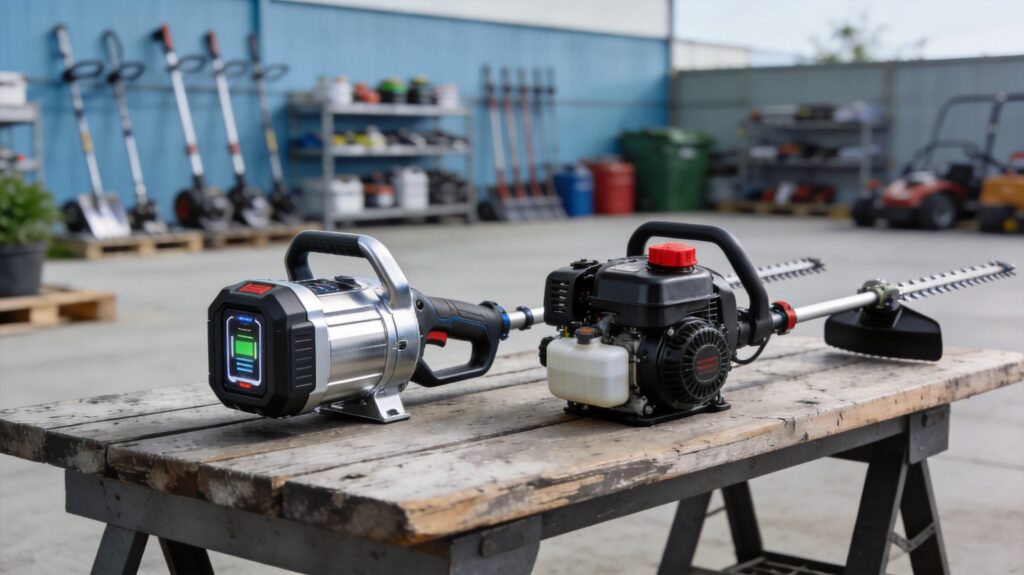
Battery Powered Lawn Mower vs Gasoline Brush Cutter: B2B Cost Analysis
The brush cutter market is undergoing a fundamental transformation. As municipalities enforce stricter emissions regulations and commercial landscaping crews demand quieter, lower-maintenance equipment, wholesale buyers face a critical inventory decision. Choosing between a battery powered lawn mower and gasoline brush cutters is no longer a simple preference—it is a financial calculation that affects procurement budgets, customer retention, and long-term profitability. This analysis breaks down the true costs and benefits of each power source to help distributors make data-driven purchasing decisions.
Why Wholesale Buyers Must Evaluate Brush Cutter Power Sources
Market Demand Shifts in Commercial Landscaping
The commercial landscaping sector is pivoting rapidly toward electrification. Major cities including Los Angeles, New York, and Miami have enacted or proposed bans on gas-powered lawn equipment, directly impacting the tools contractors can legally use. Simultaneously, large facility management companies are adopting sustainability mandates that prioritize battery powered lawn mower fleets. Wholesale buyers who ignore this shift risk stocking inventory that becomes obsolete within a single procurement cycle. For a deeper look at how these trends are shaping product demand, consult this industry reference on electrification in outdoor power equipment.
Key Cost Drivers Beyond the Initial Unit Price
The purchase price of a brush cutter represents only a fraction of its lifetime cost. Fuel or electricity, maintenance labor, replacement parts, operator productivity, and warranty claims all contribute to the total cost of ownership. For B2B buyers, these factors determine not just profit margins but also the level of after-sales support customers will demand. A cheaper gasoline unit that requires frequent carburetor repairs may ultimately cost more than a premium battery model with minimal service needs.
Head-to-Head Specifications: Battery vs. Gasoline Brush Cutters
Runtime, Torque, and Cutting Capacity
Modern battery-powered brush cutters deliver impressive performance, with high-end models offering 45 to 90 minutes of continuous runtime using 40V to 80V battery systems. Torque output has improved dramatically, allowing electric units to handle thick brush and saplings up to 1 inch in diameter. Gasoline brush cutters, however, still lead in sustained heavy-duty applications, offering unlimited runtime with refueling and superior torque for dense, woody vegetation. For jobs requiring 8+ hours of continuous cutting, gas remains the workhorse. Explore our range of gasoline brush cutter options for heavy-duty commercial use.
Weight, Ergonomics, and Operator Fatigue
Battery-powered units typically weigh 8 to 12 pounds, while gasoline models range from 12 to 18 pounds. The weight distribution also differs—batteries sit at the rear of the unit, providing better balance and reducing strain on the operator’s arms and shoulders. This ergonomic advantage translates directly into productivity: operators using electric equipment report 20% less fatigue over an 8-hour shift, allowing more work to be completed per day.
Maintenance Requirements and Downtime
Gasoline brush cutters demand regular maintenance: air filter cleaning, spark plug replacement, fuel stabilizer treatment, and carburetor adjustments. Each service event removes equipment from the field for hours or days. Battery-powered units require almost no routine maintenance—just blade sharpening and battery care. For fleet operators, this difference in downtime is perhaps the most compelling financial argument for electrification.
Total Cost of Ownership for B2B Inventory
Upfront Procurement Costs per Unit
Gasoline brush cutters typically wholesale for $150 to $400 per unit, while battery-powered equivalents range from $300 to $700, including the battery and charger. The higher upfront cost of electric units is a barrier for some buyers, but volume pricing and bundle discounts can narrow this gap significantly. Review our wholesale services to understand how bulk purchasing can reduce per-unit costs.
Fuel, Charging Infrastructure, and Consumables
Gasoline costs average $3.50 to $5.00 per hour of operation, plus the expense of mixed fuel (oil and gas) preparation. Battery-powered units cost approximately $0.30 to $0.60 in electricity per full charge. However, wholesalers must consider the charging infrastructure investment—purchasing multiple batteries and chargers to keep crews running throughout the day. A typical commercial crew requires 2 to 3 batteries per cutter, adding $200 to $400 per unit to the effective cost.
Long-Term Parts and Service Expenses
Gasoline engines have a lifespan of 500 to 1,000 operating hours before major service is required, with replacement parts readily available but labor costs accumulating. Battery systems, while more expensive to replace (a new battery pack costs $150 to $300), typically last 2,000 to 3,000 charge cycles. Over a 5-year ownership period, total maintenance costs for gasoline units often exceed the initial purchase price, while electric units remain near zero.
Matching Power Source to Commercial Use Cases
High-Volume Municipal and Utility Contracts
Municipal contracts demand reliability and minimal noise complaints. Battery-powered brush cutters excel here, operating at 60-70 dB compared to 95-105 dB for gasoline models. Utilities working in residential areas or near hospitals and schools increasingly specify electric equipment to comply with local noise ordinances.
Residential and Light Commercial Maintenance
For lawn care companies servicing suburban homes, battery-powered units offer a significant advantage: no fuel mixing, instant start, and quiet operation that won’t disturb customers. The lighter weight also reduces worker compensation claims from repetitive strain injuries.
Noise-Sensitive and Indoor-Edge Applications
Landscaping crews working in gated communities, corporate campuses, and near healthcare facilities benefit from the near-silent operation of electric brush cutters. Some contractors report winning contracts specifically because they use battery powered lawn mower equipment that meets strict noise and emissions requirements. For additional technical specifications on electric cutting tools, see this technical reference from Engineering360.
Sourcing and Logistics Considerations for Wholesale Buyers
Battery Supply Chain and Charger Compatibility
Wholesale buyers must evaluate the battery ecosystem of each manufacturer. Standardizing on a single battery platform (e.g., 40V or 80V) across multiple tools—brush cutters, chainsaws, blowers—reduces inventory complexity and allows customers to cross-utilize batteries. Verify that chargers are compatible across the product line and consider offering battery starter kits to ease customer adoption.
Gasoline Engine Compliance and Shipping Regulations
Shipping gasoline brush cutters requires compliance with hazardous materials regulations, as residual fuel and oil residues trigger special handling fees. Air freight is often prohibited, and ground shipping requires proper labeling and documentation. Battery-powered units, while subject to lithium-ion battery shipping rules, generally face fewer restrictions and lower shipping costs.
Warranty and After-Sales Support from Manufacturers
Evaluate manufacturer warranty terms carefully. Gasoline engines typically carry 1-2 year warranties, while battery systems often include 2-3 year coverage on the tool and battery. Strong warranty support reduces your liability as a distributor and increases customer confidence in premium-priced electric inventory. Check our FAQs for details on warranty coverage and replacement programs.
Resale Value and Customer Retention Impact
Battery Supply Chain and Charger Compatibility
Customers who invest in a battery platform are locked into that ecosystem for years. This creates a powerful retention mechanism—once a landscaping company owns 20 batteries and 5 chargers, they are far more likely to purchase additional tools from the same brand. Wholesale buyers can leverage this by bundling battery-powered brush cutters with complementary equipment.
Gasoline Engine Compliance and Shipping Regulations
Gasoline equipment faces increasing regulatory pressure, which may reduce resale value in markets with strict emissions laws. Distributors in these regions should carefully consider whether gas inventory can be sold before regulations take effect.
Warranty and After-Sales Support from Manufacturers
Strong manufacturer support on battery systems reduces your service burden and improves customer satisfaction. Look for manufacturers that offer rapid replacement programs and local service centers to minimize customer downtime.
Decision Framework: Choosing the Right Mix for Your Catalog
End-User Preference Trends for Battery Powered Lawn Mowers
Surveys indicate that 65% of commercial landscaping companies plan to increase their electric equipment purchases within the next two years. The primary drivers are noise complaints, fuel costs, and maintenance burden. Wholesale buyers should position themselves as electrification leaders to capture this growing demand.
Gasoline Brush Cutter Demand in Price-Sensitive Markets
Despite the electrification trend, gasoline brush cutters remain essential in price-sensitive markets and regions with limited charging infrastructure. Developing countries and rural areas still rely heavily on gas-powered equipment. Maintaining a balanced inventory ensures you serve both segments.
Upsell Opportunities with Cordless Chainsaw Add-Ons
Battery-powered brush cutters create natural upsell opportunities. Customers who purchase an electric brush cutter are prime candidates for cordless chainsaws, hedge trimmers, and blowers that share the same battery platform. This cross-selling strategy increases average order value and strengthens customer loyalty.
Frequently Asked Questions for Wholesale Buyers
Evaluating Regional Regulations and Emissions Standards
Check local and state regulations regarding gas-powered equipment. California, New York, and Washington D.C. have the most aggressive timelines, but dozens of municipalities are following suit. Distributors should map regulatory timelines for their service areas and adjust inventory accordingly.
Calculating ROI Across Different Buyer Segments
For a commercial landscaping company operating 10 brush cutters, switching to battery power saves approximately $8,000 annually in fuel and maintenance costs. Even with higher upfront prices, the payback period is typically 12 to 18 months. Present these calculations to customers to justify premium pricing.
Building a Hybrid Inventory Strategy
The most successful wholesale buyers maintain a hybrid strategy: 60-70% battery-powered inventory for forward-looking markets and 30-40% gasoline inventory for price-sensitive and rural customers. This approach hedges against regulatory changes while maximizing market coverage. Contact our team to discuss custom sourcing solutions for your specific market needs.
The transition from gasoline to battery-powered brush cutters is not a passing trend—it is a structural shift in the commercial landscaping industry. Wholesale buyers who understand the total cost of ownership, regulatory landscape, and customer preference trends will be positioned to lead their markets. By offering a balanced inventory that includes both battery powered lawn mower options and gasoline brush cutters, distributors can serve diverse customer needs while building a resilient, future-proof business model. The key is not choosing sides but strategically managing both power sources to maximize profitability and customer satisfaction.