
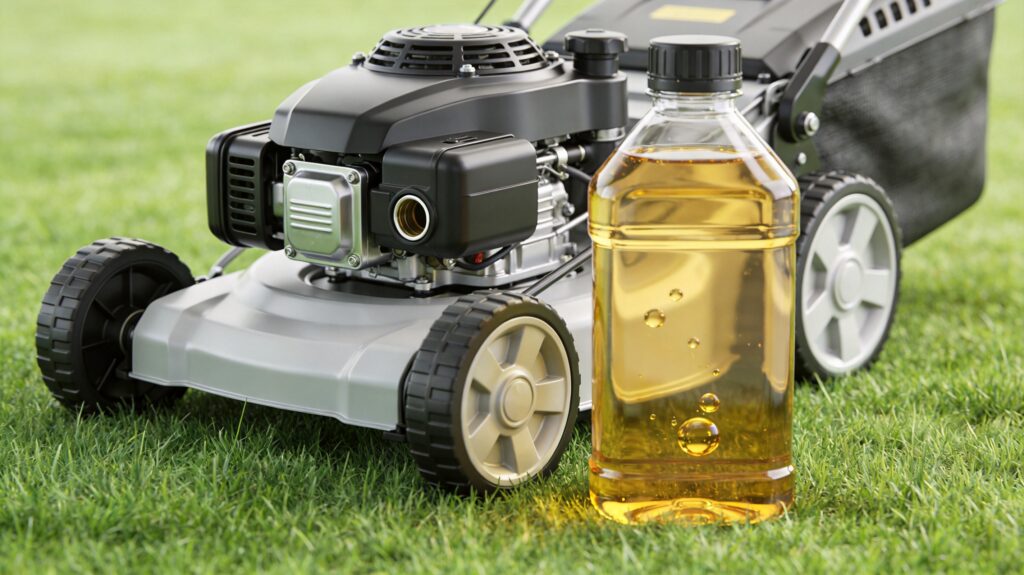
Choosing the right lawn mower oil is one of those decisions that seems simple on the surface but has a massive impact on how long your equipment lasts. I’ve seen too many operations treat it as an afterthought, only to face costly repairs mid-season. For any organization managing commercial landscaping fleets or maintaining large residential estates, the choice of lawn mower oil is not a minor operational detail—it’s a critical determinant of equipment longevity and reliability. Gasoline-powered lawn mower engines operate under high thermal loads, often in dusty and demanding environments. The right oil ensures proper lubrication of critical components such as the crankshaft, piston rings, and valve train, reducing friction and preventing premature wear.
When the correct viscosity and additive package are used, the engine runs cooler, maintains consistent compression, and delivers optimal power output. Conversely, inadequate lubrication leads to increased operating temperatures, accelerated metal-on-metal contact, and a measurable decline in cutting performance. For B2B operations where mowers are used daily during peak season, even a 10% reduction in engine efficiency translates into higher fuel costs and extended job completion times.
Using the wrong type of oil—or neglecting oil maintenance altogether—triggers a cascade of mechanical failures. The most common issues I’ve encountered in the field include:
- Carbon buildup and varnish deposits: Low-quality or incorrect oils oxidize at high temperatures, leaving sticky residues that hinder piston movement and valve operation.
- Bearing seizure: Insufficient film strength causes bearings to overheat and weld themselves to the crankshaft, resulting in catastrophic engine failure.
- Excessive oil consumption: Oils with incorrect viscosity can bypass piston rings, leading to blue smoke emissions and rapid oil level depletion.
- Hard starting and rough idling: Thick, cold-weather-inappropriate oils increase drag on the starter system and cause unstable combustion.
Each of these failure modes results in costly downtime, unplanned repairs, and shortened equipment life cycles—all of which directly impact the bottom line of any grounds maintenance operation.
Understanding the American Petroleum Institute (API) service categories is essential for selecting the correct oil. Most modern four-stroke small engines require oils that meet the API SJ or higher classification. These categories ensure that the oil contains adequate anti-wear additives, detergents, and oxidation inhibitors suitable for air-cooled engines. For a deeper dive into the technical standards, consult this industry reference on oil classifications.
Viscosity is equally critical. The Society of Automotive Engineers (SAE) grading system classifies oils by their flow characteristics at specific temperatures. For gasoline-powered lawn mowers, the most commonly recommended grades are:
- SAE 30: The standard choice for warmer climates and general summer use.
- SAE 10W-30: A multi-grade oil that provides easier cold starts while maintaining protection at operating temperature.
- SAE 5W-30: Preferred for colder environments or for mowers stored in unheated spaces.
Always consult the engine manufacturer’s manual, as some commercial-grade engines have specific requirements that differ from consumer models.
The distinction between conventional (mineral) and synthetic oils is not merely a marketing point—it has tangible engineering implications. Conventional SAE oils are refined from crude petroleum and contain a natural mix of hydrocarbon molecules of varying sizes. Synthetic oils, on the other hand, are chemically engineered to have uniform molecular structures, resulting in superior thermal stability and resistance to breakdown.
For small air-cooled engines, synthetic oils offer two distinct advantages: they maintain viscosity across a wider temperature range, and they resist oxidation significantly longer. This means extended oil change intervals and better protection during prolonged high-load operation—a critical factor for commercial mowing fleets that run multiple machines for eight or more hours per day.
The engine architecture dictates the oil type entirely. Four-stroke engines—the dominant configuration in modern walk-behind and ride-on mowers—use a separate oil sump for lubrication. These engines require straight-grade or multi-grade oils that are specifically formulated without fuel-mixing properties.
Two-stroke engines, still found in some older or specialty equipment such as string trimmers and certain edgers, require oil that is mixed directly with gasoline. Using standard lawn mower oil in a two-stroke engine will cause severe carbon fouling and eventual engine seizure. For two-stroke applications, use oils certified with the JASO FD or ISO-L-EGD standards, which ensure proper combustion and lubrication characteristics. Our 2T oil product page provides specifications for two-stroke applications.
Seasonal temperature variations demand viscosity adjustments. In summer, when ambient temperatures exceed 80°F (27°C), SAE 30 provides optimal film strength. In spring and autumn, or in cooler northern climates, SAE 10W-30 offers better pumpability during cold starts while still protecting at operating temperatures.
For operations that store equipment in unheated sheds or trailers during winter months, switching to SAE 5W-30 before the cold season is a prudent practice. This proactive approach prevents dry starts and reduces starter motor strain, which is a common cause of off-season failures.
When managing a fleet of gas powered lawn mowers, procurement decisions must balance immediate cost against long-term total cost of ownership. Conventional oils are undeniably cheaper on a per-quart basis. However, they require more frequent changes—typically every 25 to 50 operating hours—and offer less protection against thermal breakdown.
Synthetic oils, while costing two to three times more per quart, extend change intervals to 100 hours or more in many commercial applications. They also reduce wear-related repairs, which are far more expensive than the oil itself. For fleets logging over 500 hours per season, synthetic oils often prove more economical in the long run.
Commercial mowing in high-temperature conditions—such as southern U.S. summers or prolonged operation on slopes—places extraordinary stress on lubricants. Synthetic oils excel in these scenarios due to their higher flash points and superior shear stability. Blends (synthetic/conventional mixtures) offer a middle ground, providing improved protection over conventional oils at a moderate price increase, making them suitable for light commercial or heavy residential use. For additional technical data on oil performance under extreme conditions, refer to this technical reference.
For maintenance teams overseeing multiple pieces of equipment, bulk purchasing of lawn mower oil reduces per-unit costs and ensures consistency across the fleet. When qualifying suppliers, verify that they provide:
- Certificates of analysis confirming API and SAE compliance
- Consistent batch quality across shipments
- Reliable delivery schedules, especially before peak season
- Technical support for oil selection and troubleshooting
Establishing a direct relationship with a reputable lubricant distributor often yields better pricing and access to expert advice than purchasing through retail channels. Our products page lists compatible equipment and accessories for your maintenance needs.
Proper storage extends oil life and prevents contamination. Store oil containers in a climate-controlled environment, away from direct sunlight and extreme temperature fluctuations. Keep containers sealed until use to prevent moisture absorption and dust ingress.
While unopened oil has a shelf life of approximately three to five years, once opened, it should be used within six months. Implement a first-in, first-out (FIFO) inventory system to ensure older stock is used before newer deliveries. Label all containers with the purchase date and the equipment type for which the oil is designated.
The frequency of oil changes depends on operating hours, not calendar time. For commercial gas powered lawn mowers used in demanding conditions, change the oil:
- Every 25 hours for conventional oil in dusty or high-load conditions
- Every 50 hours for conventional oil in normal conditions
- Every 100 hours for synthetic oil in most commercial applications
Track hours accurately using the mower’s hour meter or a manual log. Consistent oil change scheduling prevents sludge accumulation and maintains engine compression over the equipment’s full service life.
Used oil is classified as hazardous waste in most jurisdictions. B2B operations must comply with local environmental regulations regarding its collection, storage, and disposal. Implement the following practices:
- Use designated, leak-proof containers for used oil collection
- Contract with a licensed waste oil recycler for pickup and processing
- Never mix used oil with solvents, antifreeze, or other chemicals
- Maintain disposal records for audit and compliance purposes
- Train staff on proper handling procedures to prevent spills and contamination
In most cases, yes—provided the viscosity and API rating match the engine manufacturer’s specifications. Modern car oils (such as SAE 5W-30 or 10W-30) are compatible with four-stroke small engines. However, avoid using “energy-conserving” oils designed for automotive engines with catalytic converters, as the friction modifiers can cause clutch slippage in mowers with hydrostatic transmissions. Always check the owner’s manual before substituting.
The definitive source is the engine manufacturer’s manual, not the mower brand. Look for the engine model number (e.g., Briggs & Stratton, Honda, Kawasaki, Kohler) and reference their specific oil recommendations. Key factors include:
- Engine displacement and design (OHV, flathead, etc.)
- Operating temperature range for your region
- Whether the engine has an oil filter (some commercial models do)
- Manufacturer’s stated viscosity and API classification
When in doubt, contact the engine manufacturer’s technical support line with your model and serial number for authoritative guidance. You can also reach out through our contact page for additional assistance.
Selecting the right lawn mower oil is a straightforward yet high-impact decision for any B2B grounds maintenance operation. By understanding specifications, matching oil to operating conditions, and implementing disciplined maintenance practices, you protect your equipment investment, reduce downtime, and ensure consistent performance season after season.